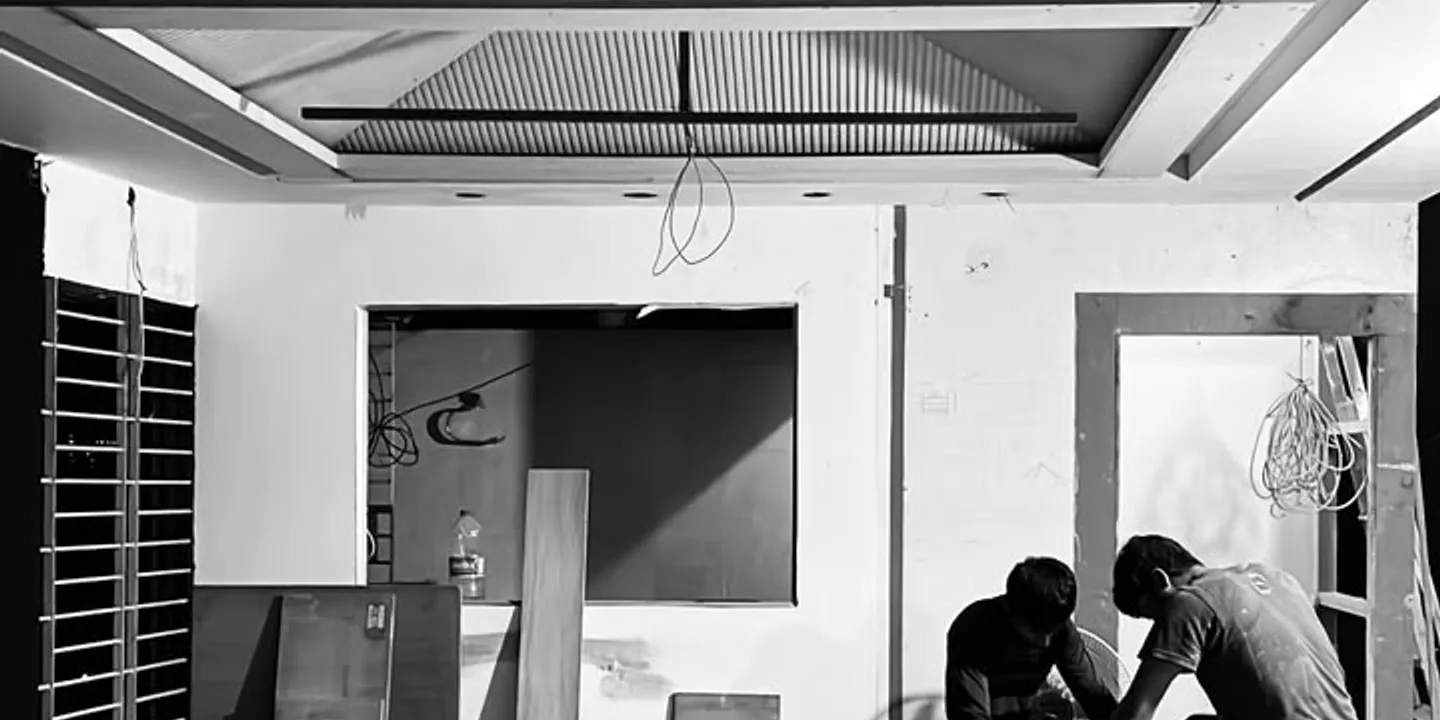
Interior design is not decoration at the end. It is the planning of how a space works, the choice of materials that survive the climate, and the coordination of every trade that touches the room. Here is the sequence we use for homes and offices in Sylhet.
1. Brief and space planning
Before colours and furniture, we map how the space will be used.
- Home: who lives there, how many guests, where the family gathers, cooking habits, storage
- Office: team size, how people work together, meeting needs, privacy, growth
Then comes the layout: circulation, zones, doors and windows, daylight. Most interior problems that show up later, like cramped corridors or dark rooms, are planning problems.
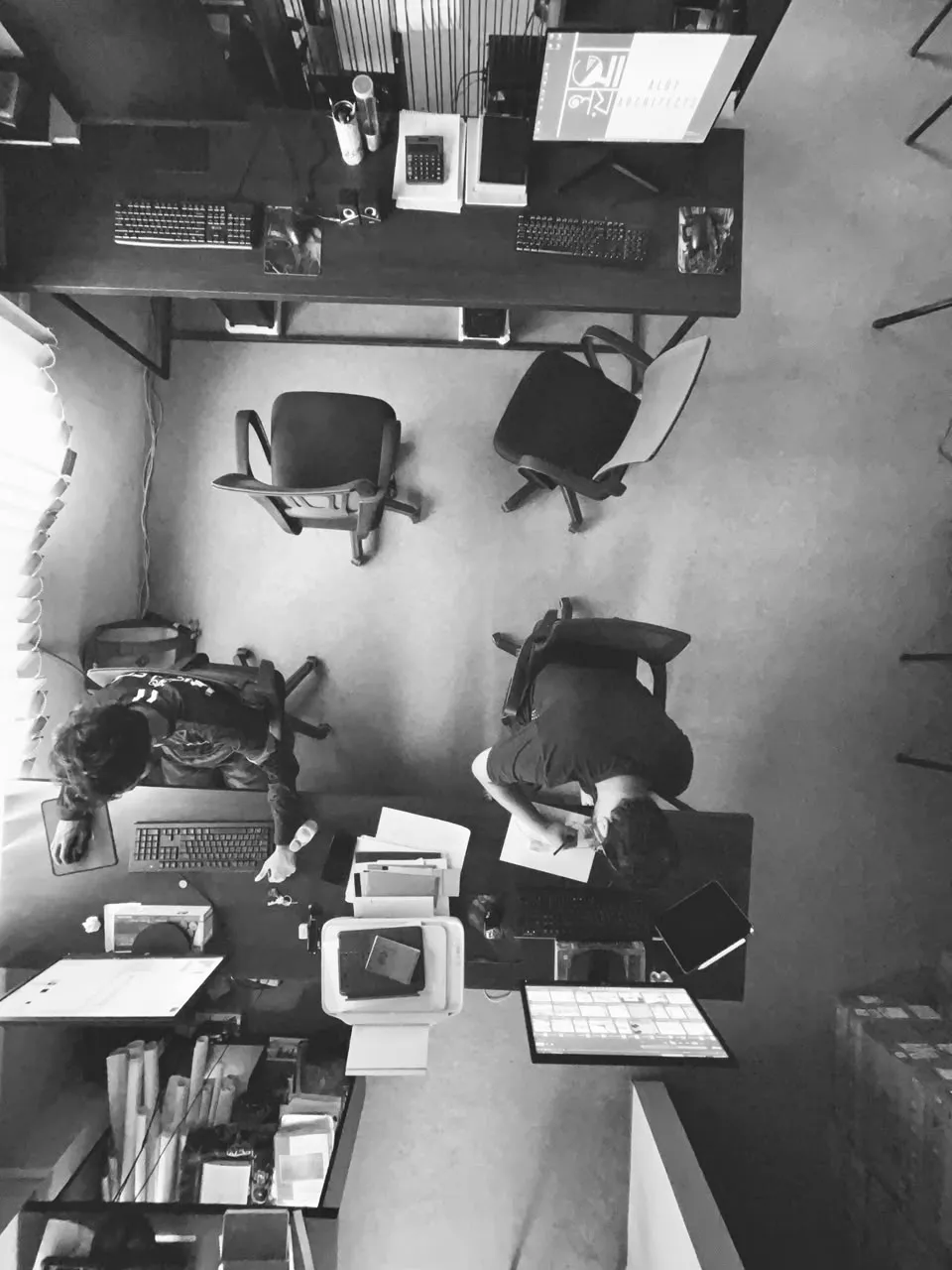
An office seen from above. Desk groupings, walkways and meeting spots are decided on the plan long before furniture is bought.
2. Concept, materials and visuals
Once the plan works, we develop a concept: materials, colours, lighting and furniture. 3D views help you see the result and make decisions before money is spent. We also prepare a materials palette so you can touch samples.
3. Drawings and specifications
The details decide whether the interior looks finished: ceiling levels, lighting positions, switch and socket layouts, joinery drawings, finishes schedules. Clear drawings and a written specification let the contractor price and build without guessing.
4. Budget and bill of quantities
Fit-out costs are made up of many small items. A bill of quantities lists them. It allows you to compare quotes fairly and decide where to spend and where to save. Our cost guide explains how to build a budget on firm quantities.
5. Fit-out on site
Sequence matters. A typical order is:
- Services first fix: electrical conduits, plumbing, air-conditioning pipes
- Ceilings and partitions
- Wall and floor finishes, tiling
- Joinery and fixed furniture
- Painting and polishing
- Lighting, fittings and final connections
- Cleaning, snagging and handover
Changing the order creates damage and rework. For example, painting before joinery installation means touch-ups everywhere.
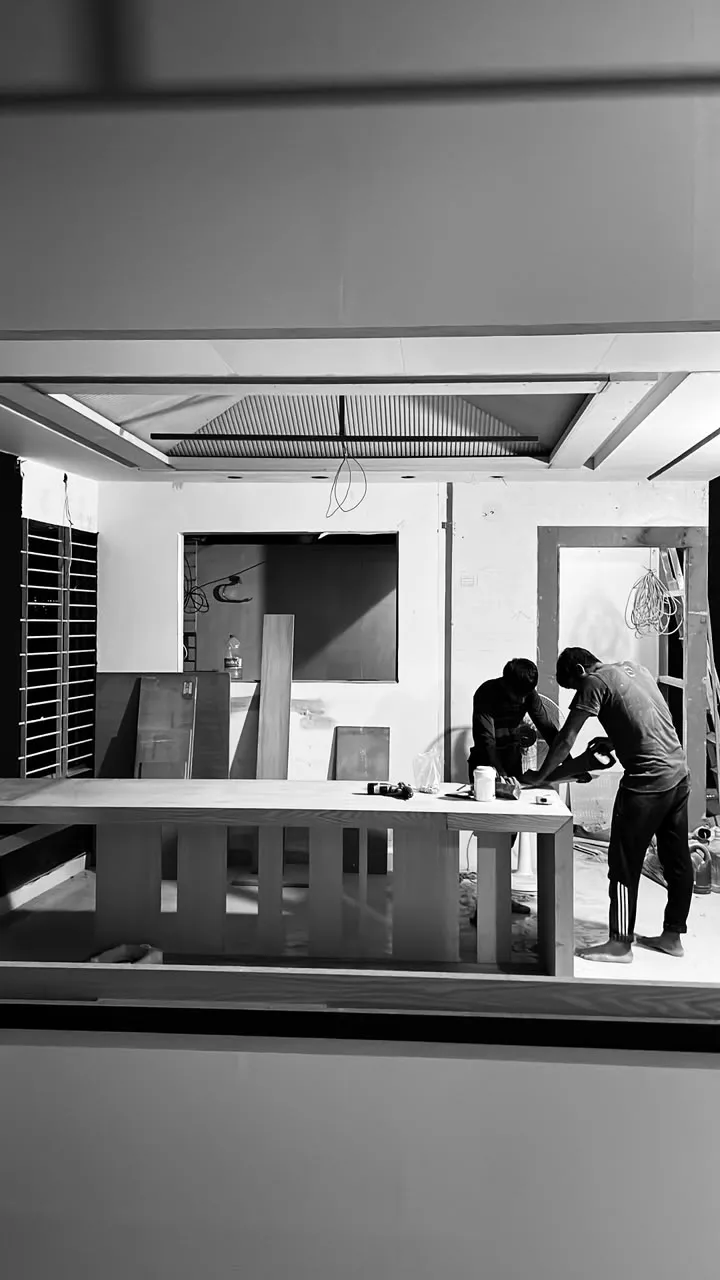
Carpenters fitting custom joinery on site. Well-drawn details and a clear schedule keep this stage predictable.
Materials that last in Sylhet
Humidity is the test for any interior here.
- Joinery: use water-resistant boards or solid and treated timber. Seal all cut edges. Plain MDF without sealing swells in damp rooms.
- Wet areas: ceramic or stone tile, proper waterproofing under tiles, moisture-resistant boards for cabinets
- Walls: paint systems rated for humid climates, with good ventilation to stop mould
- Metalwork: stainless steel or powder-coated aluminium over bare steel
- Soft furnishings: fabrics that dry quickly and resist mildew
See our article on rain-proof house design for Sylhet for how the building itself keeps damp out.
Office interiors: a few extra points
- Plan cable routes and power for growth, not just today’s staff
- Give meeting rooms sound control
- Use daylight and good lighting where people work
- Allow for flexibility: movable furniture and spare capacity
Work with the architect from day one
Interiors are easier and cheaper when planned with the building: ceiling heights, window positions and services all affect the result. If you are building new, read how to choose an architect in Sylhet.
Start your interior project
Our studio designs home and office interiors in Sylhet. See our projects and contact us to talk about your space.
Frequently asked questions
How much does interior design cost in Sylhet?
Cost depends on area, finish level and the amount of custom joinery. Ask for a design fee and a separate itemised fit-out estimate so you can compare both.
How long does an interior fit-out take?
Time depends on the size and the amount of bespoke work. A home or office usually needs design time first, then several weeks to months on site. Joinery, tiling and electrical work set the pace.
Which materials last in Sylhet's humidity?
Water-resistant boards, solid or treated timber, sealed edges, aluminium, glass, stone and ceramic tile cope well. Untreated plain MDF and thin laminate edges swell and peel in damp conditions.
Should I hire an interior designer or an architect?
For a new building, having the architect and interior designer work together from the start avoids clashes between structure, services and finishes. For an existing space, an interior designer can lead.