Landscape design is often the last thing people think about when they build, and the first thing they enjoy every day. In Sylhet, with heavy monsoon rain, strong sun and humid air, a good garden is less about plants and more about how the ground is shaped, drained and made to work.
1. Start with the ground
Before choosing plants, look at the site.
- Where does water flow in heavy rain?
- Where does the sun fall in the morning and afternoon?
- Which existing trees should stay?
- How will people move through and use the space?
Set levels so water falls away from buildings. Use a gentle slope and drains to carry runoff to a safe place. A lovely garden that floods each monsoon is not lovely for long.
2. Mark the design on site
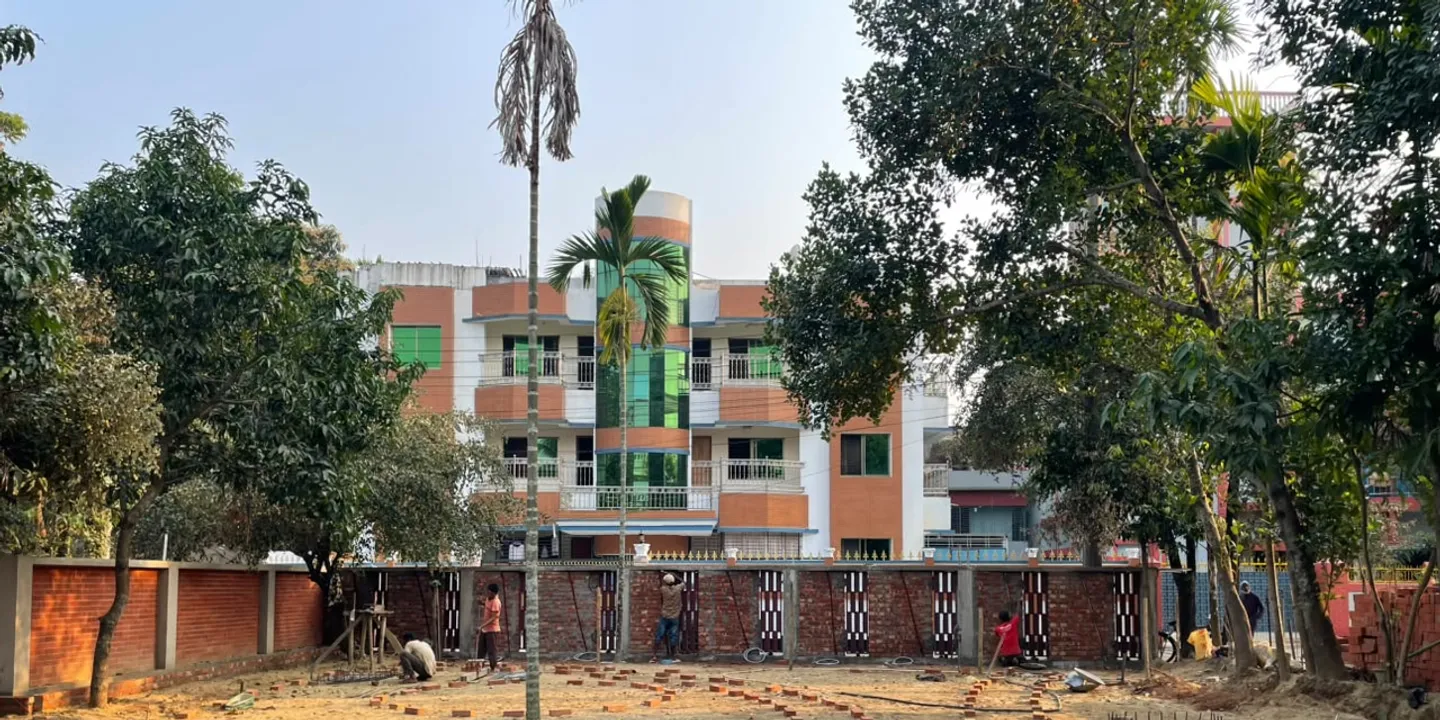
We often lay out paths, seating areas and beds on the ground with bricks, string and stakes before building anything. Walking the lines tells you more than a drawing: whether a path is wide enough, whether a seating corner gets afternoon shade, whether a view works.
3. Hard landscaping that suits the climate
Paths, courts and walls take the heaviest use.
- Brick paving is a natural fit in Sylhet. It is local, durable and can be laid with gaps that let rain soak in.
- Permeable surfaces reduce runoff and puddles.
- Edges and steps need firm foundations so they do not shift after the rains.
- Boundary walls can double as screens, planters and seating.
Read how site conditions affect cost in house construction cost in Sylhet.
4. Choose plants for rain, heat and humidity
Pick plants that cope with the conditions rather than fighting them.
- Trees for shade: large native or well-adapted trees cool courtyards and houses
- Palms: areca palms are familiar across Sylhet and thrive in the wet
- Bamboo: fast growing, good for screens and slopes (see bamboo in construction and landscape)
- Flowering shrubs and small trees: frangipani, bokul and similar species give scent and colour
- Ground cover: helps hold soil and cuts erosion
Group plants by water and light needs, and leave space for them to grow.
5. Water features need engineering
A pond or pool adds coolness and sound to a garden, but it is a structure and must be built like one. The base needs correct excavation, reinforcement and waterproofing, followed by a leak test before finishing.
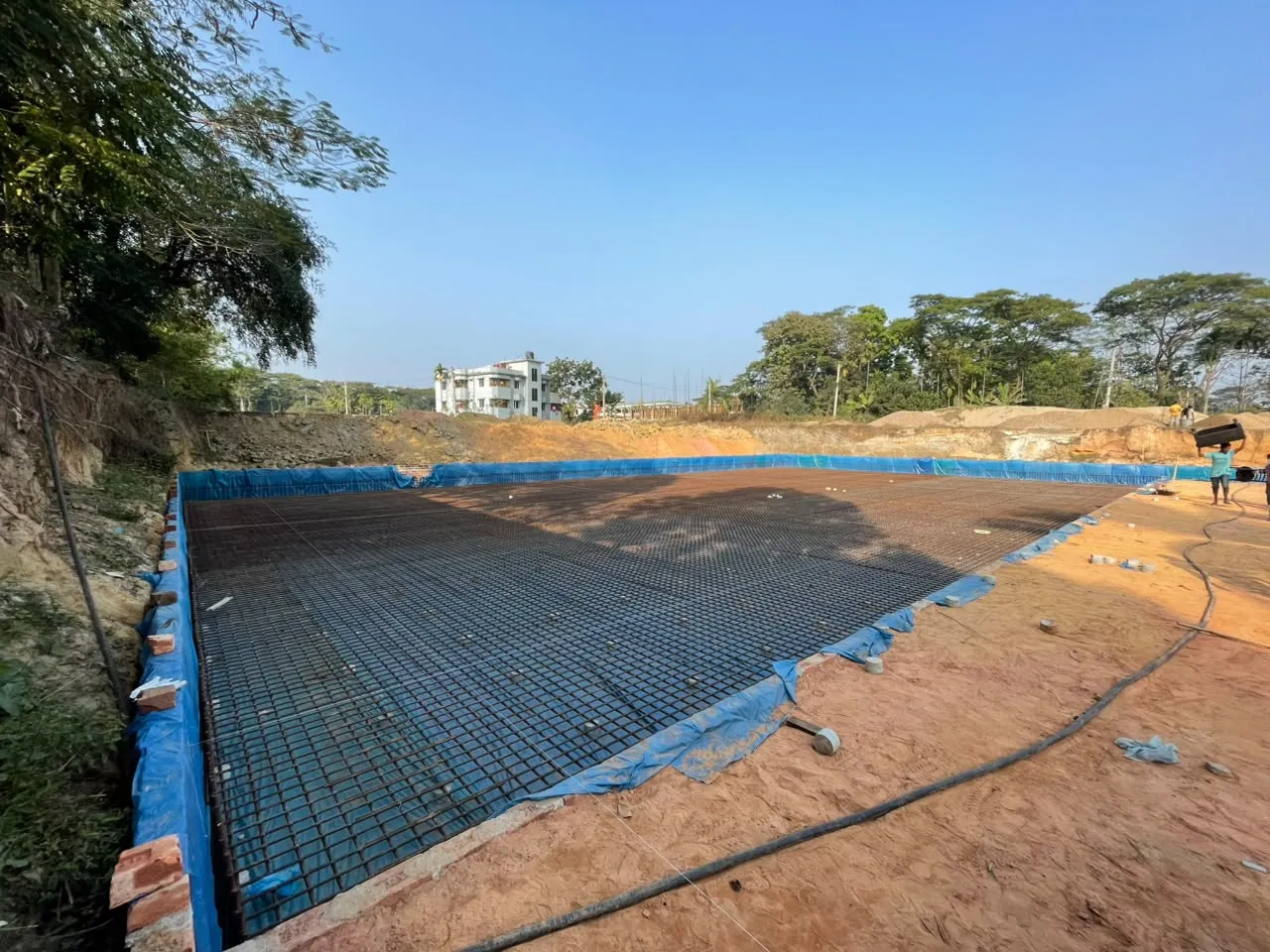
The base of a water feature before concrete: levelled ground, protective sheeting and a reinforcement grid. Getting this stage right prevents leaks later.
6. Light the garden
Low, warm lighting along paths and on trees extends the use of a garden into the evening. Use weatherproof fittings and keep cables protected from rain and digging.
7. Plan for maintenance
Every garden needs care. Choose a planting scheme your household or caretaker can manage. Use mulch to hold moisture and reduce weeding, and include irrigation for dry months.
Courtyards and climate
A courtyard also cools a building. Shade, plants and water lower air temperature, and openings onto the court allow cross-ventilation. For more on this, see on building for thermal comfort in Bangladesh.
Plan your garden with us
Our studio designs landscapes and courtyards alongside architecture and interiors. See our projects or contact us to start with your site.
Frequently asked questions
What plants grow well in Sylhet gardens?
Plants adapted to heavy rain and humidity do best. Areca palm, bamboo, bokul, frangipani (champa) and many shade-tolerant ornamentals suit local conditions. A landscape designer can match species to light, soil and maintenance.
How do I prevent waterlogging in a garden in Sylhet?
Grade the ground to fall away from buildings, use permeable paving, build drains and soak pits, and avoid low pockets where water collects. Drainage should be designed before planting.
Can I build a swimming pool or pond in my garden?
Yes, but water features need proper structural design and waterproofing. Reinforced bases, correct excavation and tested waterproofing prevent leaks and cracks.
How much does landscape design cost?
It depends on area, hard landscaping such as paving and walls, plants and any water features. Get a concept plan first, then price it item by item.